About Me

My photo
Shrewsbury, Shropshire, United Kingdom
FSC Preston Montford has been an outdoor classroom since 1957 and is a Field Studies Council centre. We deliver curriculum related outdoor education by the experts; from pre-school to Masters level; for infants, school students, undergraduates and enquiring adults with an interest in the natural world. Courses for schools and individuals. A venue for others to use; with bed space for 130, catering facilities and 7 fully equipped teaching and meeting spaces.

Sunday, June 30, 2019

For the love of Latin


It’s all fascinating the world around us. But one of the biggest issues that often puts people off learning more about the outdoors and the wildlife is the terminology and in particular, the use of scientific names. But have you ever wondered what the Latin names of animals and plants actually mean and where they came from?

The naming system:

Every species has a scientific, binomial name given to it, which helps us to identify it, and it is the same no matter where you come from or what language you speak.

Each scientific name has two parts (hence the term binomial, meaning ‘two-names’) - the first is the Genus name and the second is the species name. So for example, human beings have the Latin name Homo sapien; Homo is the genus group in which we belong and means ‘human being’ or ‘man’ and sapien is our species and means ‘modern’ or ‘wise’.

Did you know? Carl von Linné was the father of the binomial classification system, which provides a scientific name for every living organism. To make his own name sound more like the organisms he was classifying, he began to sign his name as ‘Carolus Linnaeus’, the surname by which we now know him by.

So what do they mean?

Since every species has its own unique scientific name, I am not going to be able to cover them all. However, I can show you some of the easier, more common words that you come across to get you started. However, a key bit of knowledge you need is that most names are not just Latin; many are a mixture of Latin and Greek.

Scientific names are regularly given to a species based on a whole variety of factors, such as its colour, size, shape, its behaviour, the location or habitat in which it was found, or even named after the person who discovered it. By breaking down a scientific name into its various Latin or Greek parts, you can work out what it means.

Colours:

Latin
Greek
Meaning
Example
Albus / alba / album
Leuc-
White
Quercus alba (White oak)
Ruber / rubr- / rufus / ruf- / cardinalis
Erythro-
Red  / Scarlet
Erithacus rubecula (European Robin – red chest)
Tringa erythropus (Spotted redshank)
Caeruleus / caerule-
Cyano / cyan-
Blue / Blue-green
Cyanistes caeruleus (Blue tit)
Aganisia cyanea (Blue orchid)
Flavus / gilvus / luteus
Xanthos / crocos
Yellow  (Various shades)
Crocus sativus (Saffron crocus)
Apodemus flavicollis (Yellow-necked mouse)
Niger / nigr- / Ater / atra / atrum
Melano- / Melan- / Mauro-
Black / dull black
Pinus nigra (Black pine)
Fulica atra (Eurasian coot)
Viridis / Viride
Chloro-
Green / pale green
Labrus viridis (Green wrasse)
Gallinula chloropus (Common moorhen)

Location:

Locations (often in Latin) are generally obvious and easy to work out, as the countries / continents / areas of the world where they are found are normally included in the name (e.g. Erinaceus europaeus - European hedgehog, and Ursus americanus - American black bear). Generic areas might include ‘australlis’ which means ‘southern’, ‘borealis’ which means ‘northern’. If something has ‘vagans’ in its name, it means ‘widely disributed’. More specific habitat locations may also form part of the name, as in the table below.

Latin (L) / Greek (G)
Meaning (of the…)
Example
Arvensis / agrestis / campestris (L)
Field / open plain
Alauda arvensis (Skylark)
Ammophilus / arenarius (L)
Sandy places
Leymus arenarius (Sand ryegrass)
Domesticus / familiaris (L)
House / domesticated
Passer domesticus (House Sparrow)

Aquaticus (L) / Hydro- (G)
Water (freshwater)
Mentha aquatica (Water mint)
Hali- / Halio- (G),
Maritima (L), pelagicus (L,G)
Sea (saltwater)
Halichoerus grypus (Grey seal)
Ursus maritimus (Polar bear)
Hortensis (L)
Garden
Anemone hortensis (Broad-leaved anemone)
Monantus / alpicola (L)
Mountains
Passer montanus (Tree Sparrow)
Sylvaticus / sylvestris / nemoralis (L)
Woodland / forest
Anemone nemorosa (Wood anemone)
Apodemus sylvaticus (Wood mouse)

Defining characteristics and features:

Most species are named due to a defining characteristic or features that makes it unique and different to other and similar species. This might be its shape, size, calls / songs, or particular body parts that vary, just to name a few. Below are just a few examples:

Latin (L) / Greek (G)
Meaning
Example
Major / magnus / maximus / grandis (L) Macro- / mega- (G)
Large / largest / long / great / greater / big
Parus major (Great tit)
Minor / minimus / minuta / parvus (L) / Micro (G)
Small / smaller / smallest / lesser / dwarf
Micromys minutus (Harvest mouse)
Trivialis / Vulgaris (L)
Common / ordinary
Sturnus vulgaris (Starling)
Punctatus / macuatus (L)
Spotted
Coccinella septempunctata (Seven-spot ladybird)
Platy- (G)
Broad / wide and flat
Anas platyrhyncos (Malllard) (rhyncos is ‘beak or snout’ in Greek)
Ped- / -pes (L) / Pod- (G)
Foot / footed
Eleocharis erythropoda (Red-footed spikesedge)
Volans (L)
Flying
Draco Volans (Flying dragon)

Uses / properties:

Latin (L) / Greek (G)
Meaning
Example
Edulis / esculentus (L)
Edible (although always double check before eating)
Ostrea edulis (Oyster)
Fragrans / aromaticus (L)
Fragrant / aromatic
Syzygium aromaticum (Clove)
Melliferus (L)
Produces honey
Apis mellifera (Western honey bee)
Virosus (L)
Toxic / poisonous
Cicuta virosa (Cowbane)
Officinalis (L)
For the workshop / shop, useful (vegetable, culinary, medicinal)
Rosmarinus officinalis (Rosemary)
Borago officinalis (Borage)
Tinctorius (L)
Used as a dye
Genista tinctoria (Dyer’s Greenwood)
Medicus (L)
Medicinal
Citrus medica (Citron fruit)

Time:

Annuus (L)
Annual (single year)

Aestivualis (L)
Relating to Summer
Biennis (L)
Biennial (two-years)

Autumnalis (L)
Relating to Autumn
Perennis (L)
Perennial (many years)

Vernalis / vernum / veris (L)
Relating to Spring
Nocturnus (L)
Of the night / nocturnal
Praecox (L)
Early

Hyemalis / Hiemalis (L)
Relating to Winter
Tardus (L)
Late

People’s names:

The surnames of famous people, or the explorers who discovered a species can often be found in the scientific name. For example, ‘darwinii’ shows that a species was named after Charles Darwin. A recent example was in 2007, when a new tree species (Blakea attenboroughii) was discovered and named after David Attenborough.

Greek / Latin numbers are often used in names which also gives clues to a species’ characteristics, for example, the number of petals or leaves, how many spots or legs it has, etc.

1
Mono- (G)

3
Tri- (G)

5
Penta- (G)
7
Septum- (L)
9
Ennea- (G)
Novum (L)
2
Di- (G)
Bi- /Duo- (L)
4
Quadri- (L)
Tetra- (G)
6
Hexa- (G)
8
Octo- (G)
10
Deca- (G)
Decem- (L)

So I have shown you just a few examples of how Latin and Greek terms can be used to put a scientific name together. If you therefore ever get stuck, try breaking the name into smaller chunks and work out each individual meaning. Then piece them back together and you may be able to match the scientific name to the common name. For example, ‘Trifolium repens’ describes a plant – ‘tri’ is three, ‘folium’ is leafed, and ‘repens’ is creeping. Therefore put together, this forms ‘three-leafed creeping’, which describes white clover. Diceros bicornis is divided into ‘di‘ means two and ‘ceros’ is horn in Greek, and ‘bi’ is two and ‘cornis’ is horn in Latin. Therefore, this animal is literally translated as ‘two-horns, two-horns’ and is the black rhino.

Having now seen how names are classified and the meanings behind them, what would your binomial name be?

For further information and help here are some books and websites I recommend:

Armitage, J. and the RHS (2016) RHS Practical Latin for Gardeners: More than 1,500 Essential Plant Names and the Secrets They Contain.

Lederer, J. and Burr, C. (2014) Latin for Bird Lovers: Over 3,000 bird names explored and explained.

Wright, John (2015) The Naming of the Shrew: A Curious History of Latin Names.


Me with a Brown Hawker dragonfly (Aeshna grandis)


By Vicky Brown, Tutor

Friday, May 31, 2019

Our boots were made for walking...


“Walk away quietly in any direction and taste the freedom of the mountaineer. Camp out among the grasses and gentians of glacial meadows, in craggy garden nooks full of nature's darlings. Climb the mountains and get their good tidings, Nature's peace will flow into you as sunshine flows into trees. The winds will blow their own freshness into you and the storms their energy, while cares will drop off like autumn leaves. As age comes on, one source of enjoyment after another is closed, but nature's sources never fail” – John Muir (Wood, 2019).

Cleaning boots after the latest adventure (CT).
Many Field Studies Council staff members enjoy going for a walk, whether it be in their local area or further afield, often citing reasons of exercise, enjoyment or to explore new areas for partaking in this type of recreation. The FSC Preston Montford team are no exception to this.

May was National Walking Month and so we decided to discover some of our staffs' favourite walking locations to share with you:

Liz (Office Team)
Favourite Shropshire walk – Mortimer Forest, Ludlow because I use to go there as a child.
Favourite UK walking site – The Lake District because it’s so beautiful and pure escapism.

Looking towards Blencathra from Castlerigg Stone Circle (CT).

Derwent Water Lake (CT).
Jon (Education Team)
Favourite teaching site walk – Cwm Idwal or work site [Preston Montford Estate], because they are awesome sites.
Favourite UK walking site– The Cullins on the Isle of Skye. I’ve only been once but again an awesome location.

Linda (Hospitality Team)
Favourite Shropshire walk – Nesscliffe Hill. Kynaston Cave use to be open when I was a kid and it was great fun playing hide and seek around the hill.
Favourite food to take with you on a walk – Sandwiches, crisps and biscuits.

Views from Nesscliffe over the rolling Shropshire landscape (CT).


Humphrey Kynaston's old hide out (CT).


Vicky (Education Team)
Favourite teaching site walk – It’s between the Stiperstones (for the view) or Blists Hill (good fun).
Favourite UK walking site - Not really been to many places around UK for walking but the Peak District is lovely. It has amazing views and is Elizabeth Bennet’s landscape.

The Stiperstones NNR (CT).
Mark (Associate Tutor)
Favourite teaching site walk – Llanymynech because there is good flora and fauna, industrial history and views.
Favourite UK walking site – Beechfield Dingle, Worthen, or Benthall Edge woodland.

Phil (Education Team)
Favourite teaching site walk – Cwm Idwal. It’s a dramatic location and the lake is very nice.
Favourite UK walking site – Probably Ennerdale. It’s in the Western Lake District and is mostly wooded, and the work that Wild Ennerdale do there to rewild the valley is great – removing boundaries and allowing the river to be free-willed. They also have Galloway cattle roaming free, so it’s fantastic when you stumble upon larger herbivores just roaming around! It’s also away from the tourist hubs of Windermere and Keswick.

Cwm Idwal - a dramatic glacial landscape in winter (CT).
Jenni (Growing Confidence Project Officer)
Favourite UK walking site – Northumberland Coast or Scottish Islands for the feeling of remoteness and wilderness. West-Coast woodland for feeling of connection to nature.
Favourite item to take on a walk with you – Rosie, the dog, because she is a good excuse to go for a walk.

Rosie (CT)
Charlotte (Education Team)
Favourite teaching site walk– The Stiperstones because the landscape is so dramatic and I love it when the Whimberries (Billberries) come out. I also enjoy the folklore that surrounds this site.
Favourite UK walking site – Anywhere with a coast path! Particularly Pembrokeshire or Dorset. I just love exploring hidden beaches with their amazing rockpools and admiring stacks/arches that have stood for hundreds of years.
Rockpool find - Strawberry Anemone (CT).

Durdle Door and Man O'War Cove (CT).
Angela (Hospitality Team)
Favourite Shropshire walk – Going along the canals because it’s flat and I don’t have to go over stiles – my knees play up a bit now. Plus, it’s very peaceful.
Favourite post walk treat – Lemon drizzle cake or fruit scone!

Ian (Estate Maintenance Team/Associate Tutor)
Favourite teaching site walk – Venus Bank sand quarry because it’s fab for my favourite buddies [Bees and Wasps].
Favourite item to take on a walk with you – Hand lens.

Where have you been walking this month? Does your favourite walk match with any of ours? Where will your next walk be? Why not have a look at the FSC’s General Natural History and Walking Courses, https://www.field-studies-council.org/individuals-and-families/natural-history/exploring-the-natural-world/general-natural-history-and-walking.aspx, to see if you can find your next trail adventure.

- - - - - - - - - - - - - - - - - - - - - - - - - - - - - - - - - - - - - - - - - - - - - - - - - - - - - - - -
Sources
Wood, H. (2019). Quotations of John Muir - Writings - The John Muir Exhibit - Sierra Club. [online] Vault.sierraclub.org. Available at: https://vault.sierraclub.org/john_muir_exhibit/writings/favorite_quotations.aspx [Accessed 31 May 2019].

Photo credits
CT = Charlotte Timerick

Sunday, April 28, 2019

Frogs vs Toads: What is the difference?


If you’ve been anywhere near fresh water in the past few weeks, chances are you’ve come across a frog or two. Here at Preston Montford they’ve been popping up everywhere as they wake from hibernation and begin their quest to raise the next generation. As I rescued one unfortunate toad that had tumbled down a drain outside Caradoc classroom, I couldn’t help but wonder…what actually is a toad? Is it just a frog with an ugly complexion? How can I be a biology undergraduate and not even know the difference between a frog and a toad?

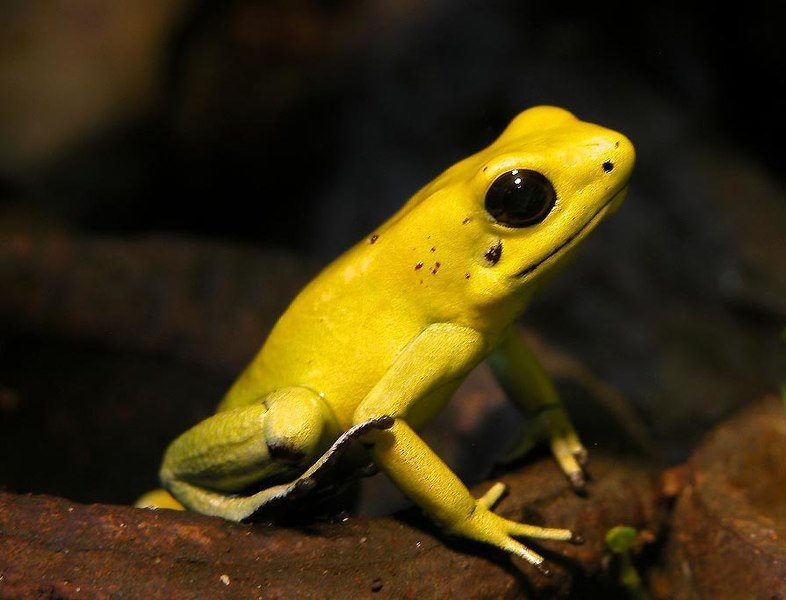
The answer is, like many things in biology (and life), it’s complicated. Frogs and toads are both amphibians, a class of vertebrates that usually spend their larval stage in water before metamorphosing into their air-breathing adult forms. If this isn’t crazy enough, amphibians are also the owners of some of nature’s most exciting skin, which can act as a secondary respiratory surface and may secrete predator-deterring toxins. The golden poison frog is the most poisonous vertebrate in the world, containing enough venom to kill 10 adult men!

Phyllobates terribilis, the aptly named golden poison frog. Source: https://upload.wikimedia.org/wikipedia/commons/thumb/6/6e/Schrecklicherpfeilgiftfrosch-01.jpg/786px-Schrecklicherpfeilgiftfrosch-01.jpg

Within the amphibians, the order Anura, literally translating to “without tail” in Ancient Greek, includes both frogs and toads. This distinguishes them from “tailed” amphibians such as newts and salamanders, but this is about as far as taxonomy takes us. There is a family of “true toads”, (Bufonidae), within this order which are grouped together based on DNA and skeletal characteristics, like their lack of teeth. However, there are several “true toads” that have an appearance more similar to frogs, and many frog species outside this group that most people would distinguish as toads. In short, it’s a massive grey area and you’d be forgiven for just collectively labelling them as frogs, (which would technically be correct).

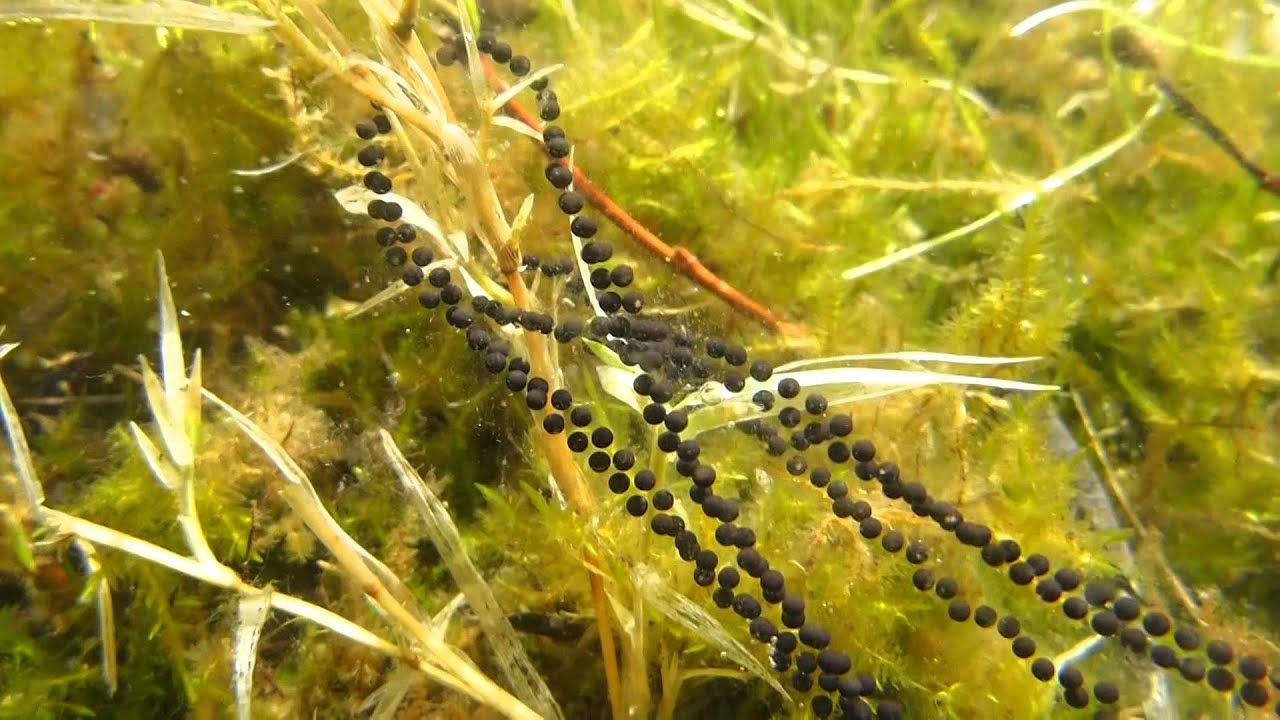
So is that it? Are toads just frogs with wrinkly skin? Well, yes, and no. Despite the many similarities between them, there are several characteristics that are generally recognised as more frog-like or more toad-like. Frogs tend to have longer legs for jumping between ponds, whereas toads have shorter legs for walking and hopping on land. Toad spawn is also distinguishable from frog spawn in that the eggs tend to be laid in long chains rather than clusters. Some toads such as Nimbaphrynoides occidentalis don’t even lay eggs at all, but actually give birth to little, fully formed toadlets, skipping the tadpole stage entirely. As I mentioned earlier, true toads also do not have any teeth…which means yes, most frogs do. They’re pretty small though, and are used for gripping onto their prey, not gnawing on human fingers.

Long ribbons of toad spawn.
Source: https://i.ytimg.com/vi/aGwAgLHY-78/maxresdefault.jpg

Of course, it’s impossible to talk about any wild animal these days, without mentioning how they’re suffering at the hands of humans. Frogs and toads make up around 90% of the world’s amphibian species, almost half of which are now in danger of extinction. Habitat loss, climate change and pollution, as well as the threat of the parasitic fungus known as amphibian chyrrid means it’s not a great time to be a frog, and quick action is needed if we are to save these iconic animals. If you have the space in your garden you may want to consider building a pond. Make sure it has plenty of vegetation and shallow sides to help the frogs hop in and out. I’ve seen at Preston Montford that even the smallest ponds can support a wealth of amphibian life, so building one really does make a difference! Of course we aren’t all able to build ponds in our gardens, but we all have the power to make an impact, whether that’s by reducing our carbon footprint or by occasionally rescuing toads from unfortunate places.

If you want to learn more about frogs and other amphibians, why not check out our courses at https://www.field-studies-council.org/individuals-and-families/natural-history/animals/reptiles-and-amphibians.aspx?

By Hannah Lawson (Education Assistant).

References

Friday, March 22, 2019

Work in Progress


If you have visited the centre within the last month or two you may have noticed the sound of a drill, the smell of fresh paint and the crime-scene-like view of warning tape strewn across the inner courtyard. What has been going on I hear you ask? Well, the short answer is…LOTS!

It all started back in February when contractors arrived on site to do a make-over on our Fish Pond. The Fish Pond is the last pond in our Wetland Ecosystem Treatment (W.E.T.) System, which processes all of the centre’s liquid waste, and as such can become very eutrophic. Over the years, duckweed (Lemna sp.) has claimed the pond surface - turning it green - and the pond bed had accumulated a large layer of silt. Now, anyone who has done any pond-dipping in our W.E.T. system will know that the Malvern nets are great for catching invertebrates and…skimming off the duckweed! If you imagine a bigger, flatter net doing the skimming and you have the solution to creating a clearer pond. Next Siltex, a form of Calcium Carbonate, was mixed into the pond. This has two main benefits: one, it raises the pH of the pond thus making it harder for the Duckweed to grow (prefers acidic conditions) and two; it creates a better environment for micro-organisms to thrive and digest the organic matter, therefore reducing the volume of silt. We are hoping that this work will increase the oxygen in the pond, therefore ensuring the survival of the fish, and overall increasing the biodiversity in the pond.
Our clear Fish Pond.
In March, we hosted sixteen keen volunteers from Birmingham University Conservation Volunteers, who kindly helped the Preston Montford team to complete a variety of tasks. The volunteers spent a busy weekend helping to remove excess vegetation from our field pond, pollarding the willow classroom, creating strong willow fences around the garden beds in the sensory garden and trimming one of our boundary hedges. The group had a jolly time and even the rain didn’t dampen their spirits.

Down in our waterproof store, our maintenance team have been carrying out a master-plan project. The store is located in the cellar of the Queen Anne House and, as such, can be sometime viewed as a dark and creepy place by our younger guests. So we have tried to create a more welcoming and friendly space. The team began by re-jigging the fixtures in the drying room to create a more open space for people to move around in. Then they went around the waterproof store painting all of the brick walls white to seal them, helping to prevent the creation of brick dust, and to give the room a lighter, fresher look. The Education team had mentioned that distributing kit to large groups was sometimes quite chaotic, so the maintenance team constructed a half-stable door to section off the storage area and a hatch through to the drying room. This will hopefully mean that a solo staff member can collect items efficiently and hand out to guests queuing at the door. If there are multiple staff members then one person can take the order, name and money at the door and the other staff members can work as a team to hand-out items or exchange items for a different size at the hatch. To aid the comfort of our guests the maintenance team have been building benches to be used whilst trying on wellingtons or waders and in the upcoming months they will hopefully re-paint the floor. The Education Team will then plan the next phase, which is to add some water-themed/field-site themed artwork to one of the walls.
Waterproof Store Project. Clockwise from top left: Re-jig of fixtures in the drying room, new benches, newly built hatch, the hatch painted and the half-stable door.
Talking of walls…on the ground floor of Darwin, we noticed that the paintwork was bobbling and flaking off – never a good sign! So two tradespeople came in to have a look. On day one they hammered the noticeboards off of the walls and drilled away the old plaster, creating plumes of dust and causing a headache in the neighbouring Education Office – the team quickly de-camped to the peace and quiet of Caradoc classroom! They also smeared on a black substance, which we can only assume was some sort of damp-prevention layer. On day two, the tradesmen beautifully re-plastered the corridor with an expertly smooth finish. Once the plaster had dried, our maintenance team then spent two days painting the walls magnolia once more. I think they’ll never want to see a paintbrush again after this month is over!
Re-attaching the noticeboards and painting the walls.
Lastly, outside of Darwin we have an impressive Beech tree that just got a little too big for its boots, well…roots. Beech trees are notorious for dropping their limbs and the long branches were tapping against the bedroom windows of the Darwin building. Therefore, Adrian (our Head of Centre) made the decision to call in a tree surgeon to give it a ‘trim’ to ensure the safety of all staff and visitors. The inner courtyard from Reception to the Darwin Building was cornered off with warning tape and a cherry-picker was brought on site for a couple of days. The tree surgeons then worked their way around the tree, reducing it by approximately 30%.
The Beech tree and the warning barriers.
We are really proud of what has been achieved in the last month or two, and hope that on your next visit you can spot the differences. We still have more plans in the pipeline, meaning that our work is forever in progress to ensure that our customers have the best experiences here at FSC Preston Montford.

Wednesday, February 27, 2019

My Almost Decade of Learning at FSC Preston Montford


Well, it is the end of an era for me this month. In March 2009, FSC Preston Montford recruited me as a Tutor to teach geography and biology. I spent the next 9.92 years learning about the power of curiosity, asking questions and using good quality data to inform environmental decisions. My personal growth is largely thanks to the boundless enthusiasm and diversity of the FSC community, students, staff and volunteers, of all whom generously shared their philosophy, values, knowledge and skills with me. If you are needing inspiration, then you can’t go far wrong spending some time at FSC Preston Montford.

My time started with a job interviewer who handed me a white tray and asked me to talk about the “exhibit” within it. Was it a conglomerate? No, a random piece of road rubble, that I was asked to be curious about. And that set the tone for my journey into fieldwork teaching. I have found myself in many random and curious places since: Enjoying the midnight sun in Finland with other European educators exchanging ideas; asking students to talk to the rocks up in the stunning Stiperstones; marveling at cross sections of mosses through a microscope; releasing a blue tit after seeing how it was ringed; capturing the solar eclipse in a colander with Bilborough College on the fire assembly lawn; acting out the story of the rock giant Tryfan (with voices!); sniffing otter poo on the river bank declaring that it does smell like jasmine tea! It has been a many and varied set of experiences. Even the estimated 400 journeys along Carding Mill Valley I hear you and countless GCSE students ask me? Well, the seasons are always different, student reactions are different, the river is different – no flow, flood flow, frozen!

Amongst the random and routine moments, I have learnt some amazing skills that will stay with me forever. I have learnt to use identification keys and now volunteer for the National Plant Monitoring Survey. I have so many bio-recording apps on my phone and have turned my appreciation for the great outdoors into a scientific pursuit. First Brimstone recorded yesterday! It feels good to know that the data is being used to help environmental decision makers. The FSC also trained me as a Mountain Leader, a remote first aider, a safety manager and a team leader, which helped me to become a better Senior Tutor and then Education Team Leader.  

All these skills and experiences will serve me well as I move on to Project Manage a heritage and conservation project at Lake Vyrnwy for the local community, RSPB and Hafren Dyfrdwy. It will be an interesting challenge to use the understanding from my teaching on habitat monitoring, place rebranding, carbon and water systems and my leadership skills to bring long term environmental, economic and social sustainability to this unique and special place.
And I go knowing this bunch of “outstanding” educators will be there for you, to continue to encourage you to be curious, look again, look more deeply and ask great questions.


By Angela Munn, Education Team Leader

Wednesday, January 16, 2019

Growing Confidence Project: Environmental opportunities for young people


 At Preston Montford this year we have free and subsidised events coming up which are aimed at young people (ages 15/16 – 25). The events are run through the Growing Confidence Project which is a partnership between Preston Montford Field Centre, Shropshire Wildlife Trust and Fordhall Farm. This project is one of 31 around the country, part of the national Our Bright Future Project. 

The project aims to help young people find out more about Shropshire’s wild places and to become the next generation of environmental leaders. Participants will gain skills, knowledge and confidence, have the opportunity to work with experts, and will meet like-minded people, be inspired and have fun!

We run a range of day events and residentials through the year. So far we have these events coming up:

Winter Twigs and Christmas Trees: Identification of Broad-leaved trees and Conifers Sunday 27th January   FREE
Explore the Wonderful World of Soil!  Saturday 23rd March FREE
Fieldwork Skills Weekend  26th – 28th April   £45
Wildlife Watching Weekend  26th -28th July  £45
Wild Skills Week  3rd – 7th August   £75

More courses will be advertised through the year. Watch this space!


If you are involved with a group who might be interested in a bespoke event or course please contact me. Last year we had a University Conservation Society come for a residential to explore Shropshire’s wild places, improve species identification skills and look at how different natural areas are managed. A local college whose students were studying a City and Guilds course also came to the centre through the project to improve their identification skills and explore natural habitats and management. The courses certainly built their confidence in the natural environment and will hopefully have helped them in journey towards a career.   

If you have attended Growing Confidence events you will be able to receive a discount on FSC natural history day courses at Preston Montford – there are plenty of courses to choose from!

Last year we ran a great range of day events including a Geology day – Exploring Shropshire’s Landscape, Making Festive Decorations (willow weaving), Food for Free - Foraging wild food, Planting for Pollinators and a Moth breakfast. Residentials included Wild Skills Week, Getting Close to Wildlife and Water Water Everywhere. Our courses aim to build confidence and skills, in for example species identification, geology, ecology, habitat management, as well as social skills, outdoor management and much more.

Here are some photos from our 2018 events:
Exploring Shropshire’s Landscape – on the Long Mynd
Wild Skills Week – canoeing on the River Severn
Wild Skills Week – on the Stiperstones
Moth Breakfast – Elephant Hawk-moth

Water Water Everywhere – River Perry invertebrate sampling
Water Water Everywhere – Whixall Moss  
Please have a look at the website for more information about the Preston Montford Growing Confidence Project and upcoming events and courses:

Shropshire Wildlife Trust run a range of events through the Project which may also be of interest including Wild Roots Youth Group and Make your Weekends Wild:

Please spread the word about the project to anyone who might be interested! These are great free or subsidised opportunities, where you will learn from and work with experts, meet like-minded people, and have fun!

Please contact me if you would like more information or would like to discuss anything: Jenni Duffell gc@field-studies-council.org


Friday, December 21, 2018

Wonders of wood and willow

Now that schools are winding down for their Christmas break, here at FSC Preston Montford our attention is turning to our centre grounds and sprucing them up for winter.

Our Grounds Keeper, with the help of Anna and Sami our Education Assistant and Education Technician respectively, has been maintaining the steps that lead down to the beautiful River Severn. The edging board of the steps was rotten and the soil was beginning to slide down the bank making it difficult to navigate safely to the path below. Therefore, they have replaced the edging board with new wood to sure up the soil - we think that they look as good as new!

Anna and Ian sawing the supporting posts.
The new steps.


Along the side of our community garden, our Education Assistants have been busy planting hundreds (215 to be precise) of trees that will hopefully improve this area for wildlife and foraging. The trees were supplied by The Woodland Trust as a result of our Education Team successfully applying to a project earlier in the year. We received a mix of species including Cherry, Hazel, Elder, Wild Rose, Hawthorn, Downy Birch, Silver Birch and Oak. Hopefully this diversity will aid the resilience of the hedge and ensure that it lasts for years to come.

Hannah and Sami planting the trees in a trench.
Guards and bark mulch were added.


Lastly, our Education Team has been creating a willow fence in the sensory garden (Exploratorium). They began this task as part of a team-building afternoon. Sami marked out the line of the fence on the ground and then everyone helped to dig regularly spaced holes for the supporting poles. Into these the team hammered Alder stakes, traditionally you would use Hazel but the Alder lengths were more readily available, upside down (ensuring that the stakes will not grow into trees). The team then infilled the holes with the removed soil plus 30cm Alder stakes to compact the soil and secure the main poles. Next we weaved the willow through the poles. Beginning with the thickest section of our willow stem at the first pole, we weaved in, out, in, out, in and out. We then reversed this, placing the thickest section of our second willow stem at the last pole and followed our first stems pattern back: out, in, out, in, out and in. Therefore giving strength to our fence. Our subsequent pairing of stems alternated the pattern of the previous pair, again to give strength and a pleasing frame to our fence. It is hoped that over the next year we will create multiple fences, each slightly bigger than the one before and overlapping in the opposite direction to form a maze...amazing!

Sami showing us how to prep the willow.
The fence taking shape.


If you would like to explore our grounds, why not attend one of our courses next year (https://www.field-studies-council.org/individuals-and-families/search-for-courses.aspx) or email enquiries.pm@field-studies-council.org to arrange a visit. We also run Duke of Edinburgh sessions on every second and fourth Sunday of the month where we do conservation work around the centre. If you are aged 15-25, our grounds an also be explored through the Growing Confidence project[CT1]  www.field-studes-council.org/gc (Email gc@field-sudies-council.org for more details).

We wish you all a happy Christmas and best wishes for 2019.